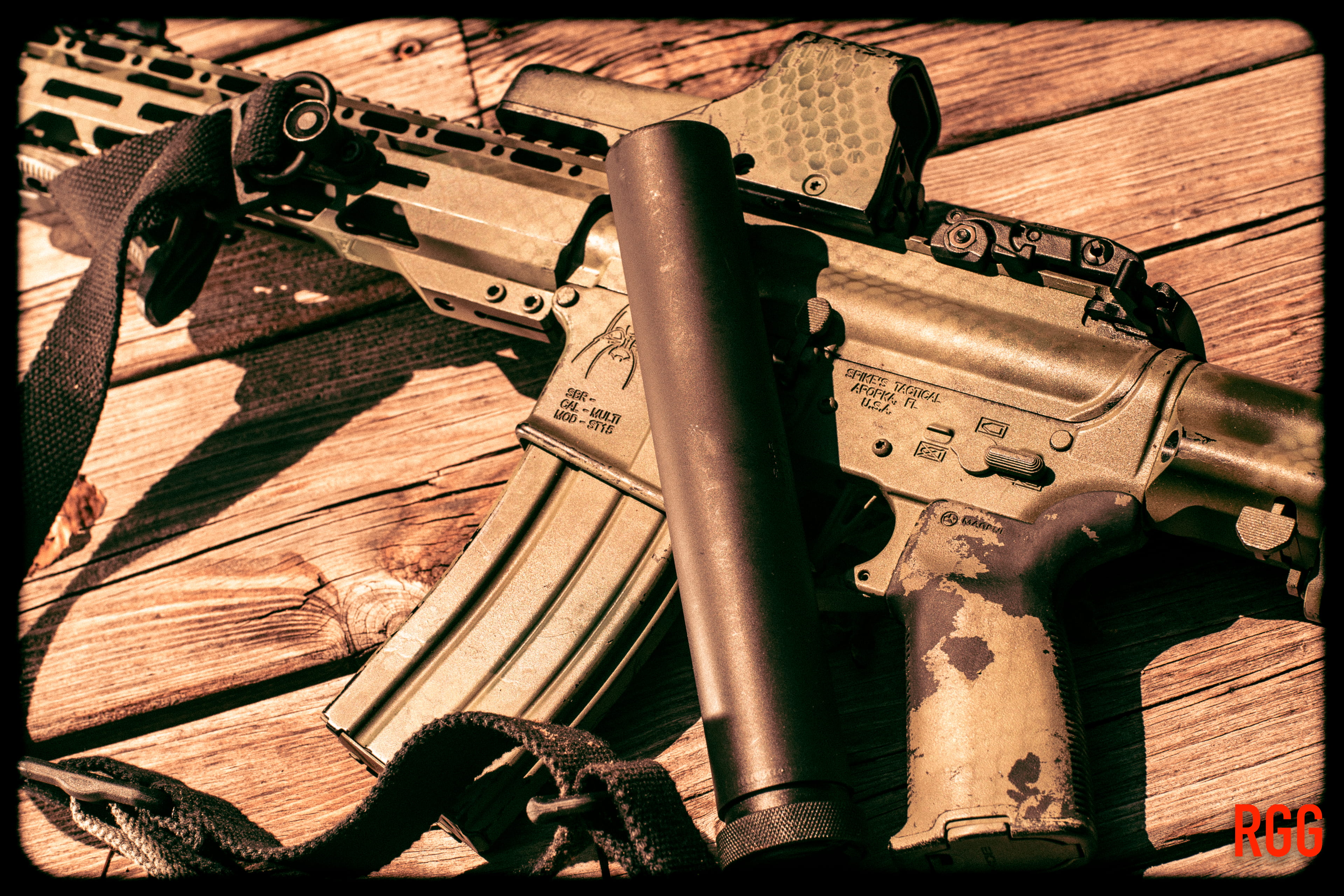
Jensen v. ATF: The Most Monumental Damage to the National Firearms Act in 92 Years
Listen up, Second Amendment Radicals.
On August 5, 2026, U.S. District Judge James Wesley Hendrix of the Northern District of Texas handed down a final judgment in the consolidated cases of Silencer Shop Foundation v. ATF and Jensen v. ATF that punched a massive hole straight through the heart of the National Firearms Act of 1934. The injunction took full effect on August 13 after the government failed to seek emergency relief. For the first time in ninety-two years, the federal government has been permanently barred from enforcing core registration, making, and transfer requirements against covered parties for suppressors, short-barreled rifles, short-barreled shotguns, and certain other weapons that Congress itself zeroed the tax on.
This is not incremental. This is not a temporary stay. This is the single most significant judicial blow the NFA has ever suffered. The regime that has forced peaceable Americans to beg for permission, submit fingerprints, photographs, and wait months (sometimes years) while the ATF decides whether you are worthy of a hearing-protection device or a short-barreled rifle has been declared beyond Congress’s enumerated powers for those items.
And the best part? Watching the gun-grabbers melt down in real time. The same people who spent decades insisting the NFA was “common sense” and “settled law” are now shrieking that civilization is ending because a Texas judge applied the Constitution as written. Somewhere, a progressive activist is currently on their third bottle of cheap chardonnay while doom-scrolling Brady Campaign press releases. Let them. Their hysteria is half the fun.
This article is a deep dive. We start with the dirty history of how the NFA was born as a deliberate constitutional workaround, track the executive and administrative expansions that followed, break down exactly what Judge Hendrix ruled and why it matters, examine the parallel cases still grinding through the courts, and map out what this means for gun owners and Second Amendment Radicals right now—especially those of us living in states like Georgia that joined the fight as plaintiffs.
Strap in.
The National Firearms Act of 1934: A Tax That Was Always a Ban in Disguise
The NFA did not emerge from some high-minded concern for public safety. It was a calculated political response to the gangster era, worker revolts, Prohibition violence, and the public fascination with weapons like the Thompson submachine gun. Franklin D. Roosevelt’s Attorney General, Homer Cummings, wanted broad federal control over firearms. The problem for him was the Constitution. Congress in 1934 understood—far more clearly than many modern courts—that it lacked the power to simply ban categories of arms.
So they copied the playbook from the Harrison Narcotics Tax Act of 1914, as well as various Jim Crow laws in the South that taxed firearms purchases in order to block free blacks from lawful ownership. Tha Narcotics Tax Act law in particular, had used the taxing power to create a registration and taxation scheme that effectively criminalized most non-medical possession of opiates. Cummings and the Justice Department explicitly modeled the NFA on it. The power to tax, they reasoned, was the power to destroy—or at least to burden so heavily that the practical result was the same as a ban.
Early Drafts: They Wanted Almost Everything
The original bill, H.R. 9066, was far more ambitious than the final product. It defined “firearm” to include pistols, revolvers, shotguns, any other firearm capable of being concealed on the person, silencers, and machine guns. The early drafts contemplated national registration and taxation of nearly the entire civilian arsenal of firearms.
That version drew intense opposition. The National Rifle Association and other groups pushed back hard against the inclusion of ordinary handguns. After hearings and horse-trading, the House Ways and Means Committee substituted H.R. 9741. Handguns largely came out. The final NFA focused on machine guns, short-barreled rifles and shotguns (barrels under 18 inches for rifles, under 18 for shotguns in the original), silencers, and a catch-all “any other weapon” category. The $200 making and transfer tax—equivalent to several thousand dollars in today’s money—was deliberately set high enough to discourage ownership by ordinary people.
Crucially, the legislative history and contemporaneous statements leave no doubt about the constitutional theory. Cummings told Congress that an outright wide-ranging ban-as-a-tax would raise serious constitutional questions. Framing the scheme as a narrower-scoped tax allowed them to dodge those questions. Registration existed to enforce the tax. Fingerprints and photographs existed to enforce the tax. Criminal penalties for possession of an unregistered NFA item existed to enforce the tax. NFA violations were technically tax evasion. The entire edifice rested on the taxing power.
This was never a secret. Supreme Court cases upholding the NFA, including Sonzinsky v. United States (1937) and United States v. Miller (1939), treated it as a revenue measure. Later decisions such as Haynes v. United States (1968) continued to describe the NFA’s core as a tax-and-registration scheme.
Revisions, Expansions, and Administrative Overreach
Congress amended the NFA over the decades. The most significant statutory change came with the Gun Control Act of 1968, which expanded definitions, added destructive devices, and tightened some provisions. The Firearm Owners’ Protection Act of 1986 froze the machine gun registry for civilians while leaving the rest of the NFA intact.
But the real growth of the NFA’s practical reach came through executive and administrative action rather than new statutes. Presidents and the ATF repeatedly used regulatory interpretation, rulemaking, and enforcement policy to expand the statute’s footprint without returning to Congress for new legislation.
Examples include successive reinterpretations of what constitutes a “short-barreled rifle,” the treatment of certain pistols with arm braces (the infamous 2023 brace rule that multiple courts later enjoined or vacated), classification games around “any other weapons,” and shifting standards for what counts as a silencer component. These were not minor clarifications. They were attempts to drag more commonly owned firearms and accessories into the NFA’s registration-and-tax regime by bureaucratic fiat.
The pattern is familiar to every Second Amendment Radical: when Congress will not pass the desired restriction, the administrative state simply redefines the existing words in the statute until it covers what the agency wants. The NFA became a favorite vehicle for this because its original text was vague enough and its tax foundation was treated as a blank check.
That blank check just got shredded.
The One Big Beautiful Bill and the Constitutional Trap
In 2025, Congress passed and President Trump signed the One Big Beautiful Bill Act. Buried inside the reconciliation package was a provision that zeroed out the making and transfer taxes on suppressors, short-barreled rifles, short-barreled shotguns, and AOWs, effective January 1, 2026. Machine guns and destructive devices kept their $200 tax.
This was a deliberate political choice. Pro-2A members of Congress, including Representative Andrew Clyde and others, had long targeted the NFA tax as an unconstitutional burden. Zeroing the tax was the achievable step through the budget process. Removing the registration requirements entirely would have faced Byrd Rule problems in the Senate.
Gun-rights groups immediately recognized the opening. If the regulatory apparatus existed solely to collect a tax, and the tax was now zero, then the regulations no longer had a constitutional foundation under the taxing power. Multiple lawsuits followed within days and weeks.
Silencer Shop Foundation v. ATF (filed July 4, 2025) was the lead case. Plaintiffs included the Silencer Shop Foundation, Gun Owners of America, Gun Owners Foundation, Firearms Regulatory Accountability Coalition, industry partners such as Palmetto State Armory, SilencerCo, and B&T USA, individual plaintiff Brady Wetz, and a coalition of fifteen states: Alaska, Georgia, Idaho, Indiana, Kansas, Louisiana, Montana, North Dakota, Oklahoma, South Carolina, South Dakota, Texas, Utah, West Virginia, and Wyoming.
Jensen v. ATF (filed October 2025) brought additional individual Texas plaintiffs (John Jensen, Jeremy Neusch, David Lynn Smith), Hot Shots Custom LLC, the Texas State Rifle Association, FPC Action Foundation, and the Citizens Committee for the Right to Keep and Bear Arms. The cases were consolidated. Judge Hendrix heard argument and issued a 66-page memorandum opinion and order on August 5, 2026, followed by final judgment the same day.
What the Court Actually Held
Judge Hendrix did not declare the entire National Firearms Act unconstitutional. He did not order the destruction of the National Firearms Registration and Transfer Record. He did not reach the plaintiffs’ Second Amendment claims (those were dismissed without prejudice as abandoned once the enumerated-powers holding disposed of the case).
What he did was precise and devastating.
He held that Congress enacted the challenged NFA provisions under its taxing power. The registration requirements, Form 1 and Form 4 application processes, identification mandates, and associated criminal prohibitions were claimed to be constitutionally permissible only because they aided the collection of the making and transfer taxes. By zeroing those taxes for the covered categories, Congress eliminated the constitutional basis for the regulations that formerly supported the taxes.
The government tried to salvage the scheme under the Commerce Clause and the Necessary and Proper Clause. The court rejected those arguments. The NFA’s text, structure, and history showed Congress had invoked the taxing power, not commerce. Courts do not get to rewrite the constitutional foundation of a statute after the fact simply because the original foundation has been removed.
The permanent injunction bars the ATF and DOJ from enforcing the following against the covered plaintiffs, their members, and their customers (current and future) with respect to untaxed firearms:
- 26 U.S.C. § 5812(a)–(b) (transfers)
- 26 U.S.C. § 5822 (making)
- 26 U.S.C. § 5841(a)–(c), (e) (registration)
- 26 U.S.C. § 5842(b) (identification)
- 26 U.S.C. § 5861(b)–(f), (i) (prohibited acts)
- 27 C.F.R. § 479.62(a)–(d) and § 479.84(a)–(d) (application regulations)
Machine guns and destructive devices remain fully under the NFA. Standing limited the AOW relief in the Jensen portion of the case. The court explicitly declined to issue a universal injunction, citing recent Supreme Court precedent limiting nationwide relief.
The seven-day stay expired. The government did not seek emergency appellate relief. The injunction is in effect. The Department of Justice still has a longer window to file a conventional appeal, but as of this writing the practical reality on the ground for covered parties is that the federal registration regime for these items has been enjoined.
What This Means for Gun Owners and Second Amendment Radicals
For members of the plaintiff organizations—Gun Owners of America, Texas State Rifle Association, FPC Action Foundation, CCRKBA, and customers of covered dealers—the federal Form 4 and Form 1 process for suppressors, SBRs, and SBSs is no longer enforceable by the ATF. That is a historic change.
It does not mean the NFA is dead. It does not mean every American can walk into any gun shop tomorrow and buy a suppressor with only a 4473. State law still matters. Many states have their own statutes that independently prohibit or regulate these items, or that incorporate federal NFA compliance as a condition of legality.
This is where states like Georgia's status as a plaintiff becomes important. When a state joins a successful challenge to federal enforcement, its own Attorney General has significant discretion over how aggressively (or whether) the state continues to enforce parallel state provisions against people covered by the federal injunction. Second Amendment Radicals in Georgia should pay close attention to guidance from the Attorney General’s office and from GOA and other litigating organizations. The federal victory creates political and legal space for state-level non-enforcement or formal clarification.
Other states like Alaska that joined as plaintiffs have the same opportunity. States that did not join remain free to maintain their own restrictive regimes, and the federal injunction does not preempt those state laws.
Practical reality for the average gun owner right now:
- If you are a member of a covered organization or a customer of a covered dealer in a free-er state, the federal registration barrier for these items is down for you. Note you can sign up right now for Gun Owners of America, go to a Silencer Shop affiliate (the only ones brave enough to sell cans with just a 4473 as of this writing), and get yourself squared away.
- Dealers are still navigating compliance, special occupational tax issues, and the risk of future appellate developments. Many are proceeding cautiously and seeking clarification from ATF and DOJ.
- The first lawful unregistered suppressor transfers in 92 years have already occurred. Brandon Herrera, Wes Virdell, and others have publicly documented early transfers under the injunction. That genie is not going back in the bottle easily.
- If you live in a grey-area state like Georgia, nothing changes until the AG or the state legislature says otherwise.
- If you live in California ect, sadly nothing changes since even if you could register an item NFA-wise, the State bans it.
- Making (Form 1) is covered, but with SBRs tread carefully as it's unclear whether marking requirements remain in effect.
This is exactly the kind of incremental-but-real victory that builds momentum. Zero the tax. Force the constitutional confrontation. Win on enumerated powers. Then keep pushing the parallel Second Amendment claims in other cases and in future litigation.
What's It Like To Buy A Silencer Without The NFA? Let's Find Out 🇺🇸⬇️
— Mrgunsngear (@Mrgunsngear) August 17, 2026
To buy a suppressor at PSA: https://t.co/...
#NFA #silencer #suppressor #CivilRights #2nd #2a
Parallel Cases Still in the Pipeline
Jensen/Silencer Shop is not the only fight. SAF is a named plaintiff in Brown v. ATF in the Eastern District of Missouri. Another challenge, Roberts v. ATF, is proceeding in Kentucky. These cases raise similar enumerated-powers arguments and, in some instances, fuller Second Amendment claims. The Texas ruling will be cited heavily. A circuit split or eventual Supreme Court review remains possible, especially if the government eventually appeals the Texas judgment or if other districts reach different conclusions.
Representative Andrew Clyde has been vocal in urging the administration not to appeal and to apply the logic more broadly. Brandon Herrera has used his platform to publicize the practical effect of the ruling. Gun Owners of America, as a lead plaintiff organization, continues to push for membership expansion precisely so more gun owners fall inside the injunction’s protective scope. Follow @GunOwners, @RepAndrewClyde, @TheAKGuy (Brandon Herrera), and the organizational plaintiffs for the latest operational guidance.
The Path Forward for Second Amendment Radicals
This victory did not fall from the sky. It required Congress to zero the tax, multiple organizations to file coordinated lawsuits on day one, states to join as plaintiffs, excellent lawyering, and a judge willing to read the Constitution and the statute honestly. It also required the political environment created by years of relentless advocacy by groups that refuse to compromise.
If you are not already a member of Gun Owners of America, join. Coverage under the injunction is one of the most concrete, immediate benefits membership has ever provided. Their no-compromise posture is exactly what produced this result. The same goes for supporting the other plaintiff organizations and the state attorneys general who had the spine to join.
The gun-grabbers will keep screaming. They will claim this decision endangers children, enables criminals, and destroys the fabric of society. They said the same things about shall-issue carry, about Heller, about Bruen, and about every other incremental restoration of the right to keep and bear arms. Their hysterics are predictable. Their alcoholism is optional but apparently increasing. Ignore the noise and keep stacking.
The NFA is wounded. It is not dead. Machine guns and destructive devices remain tightly controlled. State laws still bind. Appellate risk remains. But for the first time since Franklin Roosevelt signed the original act, a federal court has looked at the registration scheme for the most commonly owned NFA items and said the emperor has no constitutional clothes once the tax is gone.
That is monumental. Celebrate it. Exploit it within the bounds of the actual injunction and your state law. Support the groups that made it happen. And prepare for the next round, because the people who built the NFA never intended it to stop at machine guns and silencers. They wanted everything. The early drafts prove it. The only thing that has ever stopped them is organized, unapologetic resistance by Second Amendment Radicals who refuse to accept permanent second-class status for commonly owned arms.
Trust GLOCK. Not Flock. Not the administrative state. And certainly not the people currently rage-posting about how a Texas judge just “deregulated” hearing protection.
The fight continues. This was a very good day.
Disclaimer: This post is for informational and educational purposes only. It does not constitute legal advice. The injunction is limited to specific parties and specific provisions. State laws vary dramatically and remain fully enforceable. Before taking any action involving NFA items, consult a competent firearms attorney licensed in your jurisdiction who is current on both the federal injunction and your state’s statutes. Membership in plaintiff organizations and customer status with covered dealers may affect your coverage. Do your own due diligence.
Stay dangerous. Stay peaceable. Stay free.
note: I wrote this with the aid of Grok. Let me know what you think. With Grok I can output faster, but it may not seem like "me" as much. Without Grok, you get "me" but slower.
Get Yourself A Gun And Learn It
This is a firearms blog, so we're going to recommend guns. Of course don't forget other things like medical, comms, doing your Area Study, and so on. There's better sources than RGG on those topics, but for firepower, we have you covered.
Ideally you'll at least want either a basic rifle, i.e. an AR-15, or a pistol, i.e. a GLOCK 19, to start. Both are exceedingly common firearms with plenty of accessories, spare parts, training, and support. However, in some restricted areas, both an AR and a GLOCK are hard to get easily, and you may have to settle for a shotgun for quickly arming yourself. It beats a sharp stick. Note, the in-house counsel wants to remind you that we're talking the legal acquisition of guns here. We're still working on abolishing gun control, and we don't want you in jail. Unfortunately you'll have to play ball in this regard. But anyways, here are some basic suggestions for getting armed.
| Firearm | Cost | Buy Now |
|---|---|---|
| Radical Firearms RF00028 AR-15 | $469 | Buy Now! |
| GLOCK 19 Gen6 9mm Pistol | $620 | Buy Now! |
| Mossberg 590 Shotgun | $621 | Buy Now! |
Learn how to make guns, as well.
| 3D Printer | Cost | Buy Now |
|---|---|---|
| Ender Creality 3 V3 SE | $186 | Buy Now! |
Support This Site
Operating Regular Guy Guns and bringing you quality content costs money, money that I am more than happy to spend, even after all these years! I get the occasional sponsor, but bills still have to be paid, ha ha.
You'll see the articles peppered with affiliate links. I get a few pennies when you make your purchases via my links.
-
Buy more guns at Palmetto State Armory
-
Buy more guns at Bear Creek Arsenal
-
Buy more guns at Brownells
TODO
Broken links in old articles
Addendums to old stuff
Buy more guns and make more guns
Podcast? AI killed the podcast.
Donate Bitcoin: 36wKfH7wgQQna6BByvAe8oiEmdqREUXuYQ