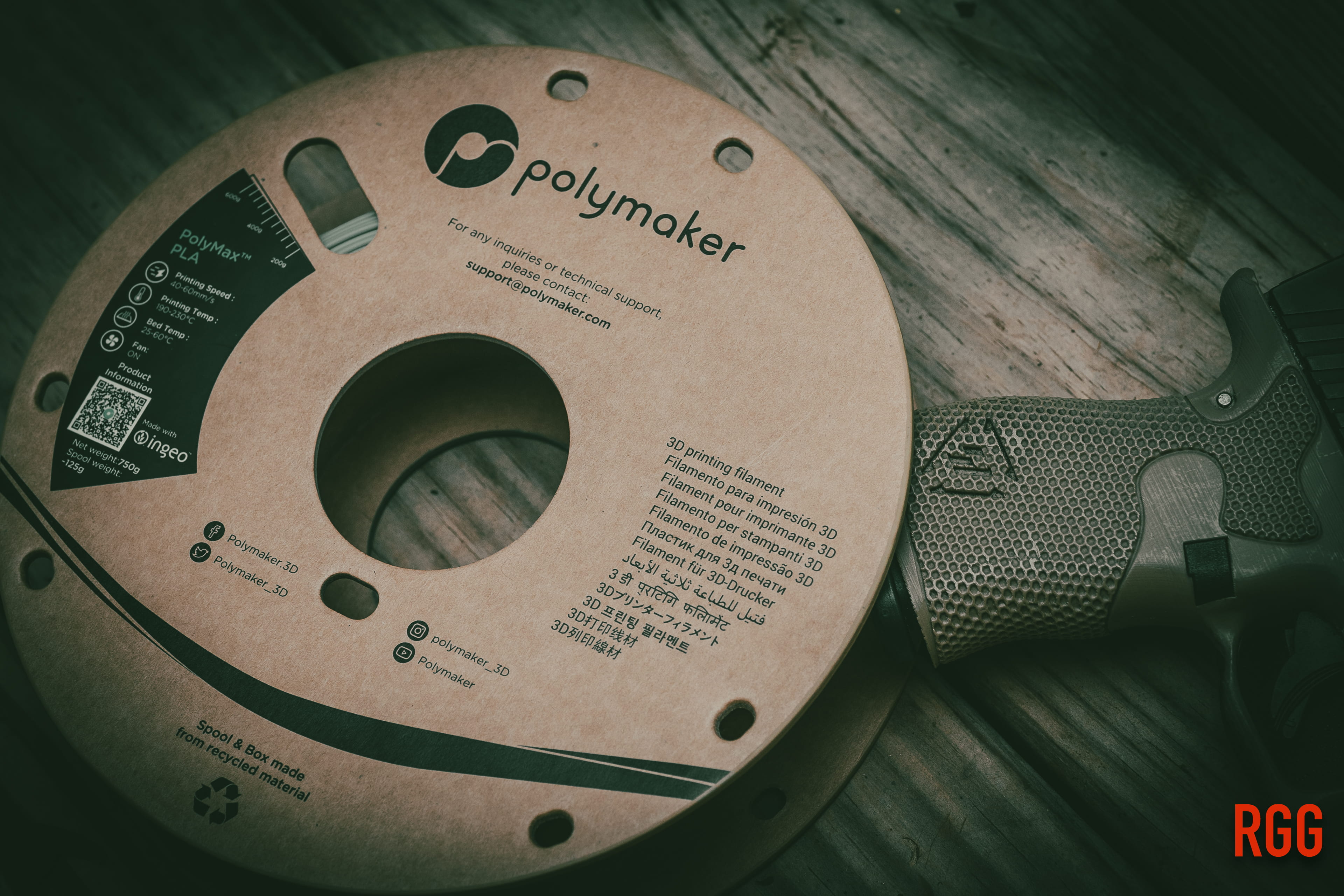
Second Amendment Radicals, check this hysterical nonsense out.
On Monday, October 5, 2026, the County of San Diego walked into its own Superior Court and sued a filament company. Not a gun company. Not a kit company. Not a guy with a mill in his garage. A company that sells spooled plastic. The kind of plastic you use for a benchy, a bracket, a cosplay helmet, a drawer pull, and, yes, if you are a free man in a free state, firearm components and complete firearms.
The plaintiff is the People of the State of California, acting by and through County Counsel Damon M. Brown. The defendant is Polymaker LLC. The assisting counsel is not some overworked deputy with a grudge against layer lines. It is White & Case, a global law firm, sitting next to the Giffords Law Center to Prevent Gun Violence. The press shop rolled the case out the same afternoon as lawsuits against Roblox and AppLovin, under a brand-new Consumer Fairness and Public Protection Unit that did not exist long enough to have scuffed the furniture.
Read that again. The launch party for a consumer-protection unit included a lawsuit against the company that makes the "ink" for a 3D printer.
This is the call to arms, and it is not metaphorical. They have run out of gun companies they can conveniently bankrupt and started on the raw material. Filament today. If this theory survives, the next defendant is whoever sells the aluminum, the steel tube, the spring, the drill rod, and the epoxy. Alcoa is not a punchline. Alcoa is the next caption if San Diego gets away with this one. They'll probably sue God for making the Earth at this rate. Because metal came from the Earth or something.
The complaint is public. Lemon at the GunCAD Index put it up, and Cam Edwards at Bearing Arms did the first mainstream read. The county's own version is the sanitized one. Use both. The plastic does not care which PDF you open. The lawyers do.
They Sued the Spool, and They Wrote It Down
The case is styled The People of the State of California v. Polymaker LLC. It was filed October 5, 2026, in San Diego Superior Court, Hall of Justice. The circulating copy of the complaint does not show a stamped case number. The caption tells you the theory anyway: violations of the Unfair Competition Law, California Business and Professions Code sections 17200 and following. The county's press release also waved the False Advertising Law at the cameras. The document they actually filed leads with the UCL. That is not a small tell. The UCL is the junk drawer of California litigation. Unlawful, unfair, fraudulent. If they can find a statute they like and staple your marketing to it, they do not need a victim, a contract, or a verdict about a crime. They need a press conference and a defendant small enough to bleed.
The county's own writeup is two minutes long and very proud of itself. Board of Supervisors Chair Terra Lawson-Remer gets the quote about trusting products and apps. County Counsel Damon Brown gets the quote about hitting the ground running. Assistant County Counsel Alysson Snow emphasized accountability for companies that "enable dangerous ghost guns." The San Diego Union-Tribune and NBC 7 carried the launch. The Business Wire release is the version written for donors and reporters who will not open the PDF.
Here is the part they hope you skim.
Polymaker LLC is a Delaware company with its principal place of business in Missouri City, Texas. The complaint identifies Jun Li as the sole manager or member. It is registered to do business in California. Its agent for service is in Sacramento. The complaint says Polymaker imports filament from China through the Long Beach and Los Angeles ports, and that California accounts for about thirty-four percent of those imports. That is the jurisdictional hook. A Texas company selling plastic, shipping through California ports, with a Prop 65 page and a CCPA page on the website, is now "purposefully targeting California consumers."
Having a privacy-policy page for California is not a confession. It is what every company does so a different set of California lawyers does not sue them for the privacy policy. San Diego read compliance as intent, because of course they did.
What they say Polymaker did
The complaint is not subtle, and it is not confused about the product. The introduction admits the quiet part and then yells it.
They are not asking the court to ban filament in California. They say filament is not inherently illicit and has lawful uses. They want Polymaker liable for a "strategic business choice to design and market its filaments in order to profit from the illegal manufacture of 3D printed ghost guns in California."
Translation: the plastic is legal. The customers are the problem. The brochure is the crime.
The specific acts, as alleged:
Polymaker sold a creator spool, the 3D Print General PLA Pro, in collaboration with Sean Aranda, who posts as the 3D Print General. The label carries his likeness and the slogan "Come and Make It," which the complaint correctly identifies as a play on "come and take it." The county says that slogan tells you the spool is for guns. The county has apparently never met a machinist, a car guy, or anyone who owns a hat.
The complaint says Polymaker sponsored Aranda after YouTube demonetized him, later hired him as Head of Customer Experience, and kept marketing into the same audience. It says Polymaker ran affiliate relationships with 3D-printed-gun influencers, so a creator could earn a commission when a follower bought filament. It says Polymaker posted in gun-printing communities, showed firearm-shaped parts in product photography, including Fiberon PA612-CF15 pages, and kept a wiki note about which adhesive to use when bonding a printed part to a machined metal part.
That last one is the tell. Adhesive advice is now a predicate act. The wiki said glue works on plastic and metal. San Diego called it aiding and abetting.
They also drag in Gatalog and CTRL+Pew, the same targets Attorney General Rob Bonta and San Francisco City Attorney David Chiu sued in February 2026 for distributing digital files. Giffords applauded that one through Chief Counsel Adam Skaggs. October is the sequel. February was the files. October is the plastic. The pattern is the point.
The harm they photographed
Paragraph 12 is the emotional exhibit. In May 2026, the complaint says, San Diego police arrested a 16-year-old who had a loaded handgun at school and was trafficking firearms. The Ghost Gun Team then searched a home workshop and found Polymaker filament, four printed handgun frames, printed conversion devices, ammunition, a printer, and a camera-ready photo of the pile.
A spool in a photograph is not a causation theory. It is a prop. The same workshop could have held Hatchbox, Polymaker, eSun, or a no-name reel from the jungle site, and the frames would still be frames. Presence is not promotion. If a burglar leaves a DeWalt battery at the scene, Black & Decker does not become a party to the burglary. San Diego would like a different rule for plastic that has been photographed next to a gun-shaped object.
The relief, which is the actual weapon
The prayer for relief is where a small company goes to die.
Disgorgement of revenue tied to the alleged practices, including California sales the county wants to attribute to influencer campaigns and affiliate links. Civil penalties of up to $2,500 per violation of section 17200, with each day the marketing was "accessible to California audiences" pleaded as its own violation. An injunction against the "unlawful" conduct. An injunction against the "unfair" conduct. Attorney's fees.
Run that daily-penalty theory out. A product page that has been up since the October 2022 creator-spool launch is not one act. In their pleading, it is a stack of days. A Missouri City company does not need to lose on the merits to lose the company. It needs to fund White & Case rates long enough for the injunction talks to start. That is the business model. Giffords does not have to win the century. It has to make the next filament company look at the caption and decide the 3D2A audience is not worth the docket.
The theory, which is the part that should keep you up
California Penal Code section 16531 defines a "firearm precursor part" to include any forging, casting, printing, extrusion, machined body, or similar article that is marketed or sold to the public to become or be used as the frame or receiver of a firearm once completed, assembled, or converted. Business and Professions Code section 22949.62 and Penal Code section 30400 then restrict sale of precursor parts that are not federally regulated as such.
Read the trick slowly. The object is not a precursor because of what it is. A reel of PLA is a reel of PLA. It becomes a precursor, in this lawsuit, because of what the seller said about it, who the seller hired, and which forums the seller posted in. Marketing is the element that turns a commodity into a regulated gun part.
San Diego did not invent the absurdity. The complaint points at the California DOJ's own precursor guidebook move against the Ghost Gunner "AR-00," a solid block of aluminum designated a precursor because it was marketed as something that could become a receiver. A brick of metal. Marketed. Therefore a gun part. The filament suit is that theory with the serial numbers filed off and the defendant swapped for a plastics company.
Edwards nailed the First Amendment problem. The complaint does not allege Polymaker aimed this speech at California. It alleges a nationwide audience, a Texas company, a 3D2A-creator-branded spool, and a wiki. Conduct that is lawful in most of the country becomes the basis for a California penalty because California can read the internet. That is not consumer protection. That is a speech tax with a county letterhead.
The Protection of Lawful Commerce in Arms Act is not obviously going to save them, and that is the point you should sit with. PLCAA shields manufacturers and sellers of firearms and ammunition from a defined class of lawsuits over third-party misuse. Polymaker does not make firearms. A clever plaintiff's lawyer picks a defendant outside the shield, pleads state unfair-competition law, and dares you to call a spool a qualified product. Sue the aluminum company and the federal immunity statute never wakes up. That is why this case is worse than another kit-maker suit. It is an attempt to move the liability line from the gun, past the kit, past the file, and onto the raw material.
What next, they sue Alcoa? Yes. Then the spring factory. Then the hardware store that sells 4140. Then the epoxy company whose product page mentions "metal to polymer." Then the printer company, which Sacramento already queued up.
AB 2047, the California Firearm Printing Prevention Act, passed in August 2026 and was signed by Gavin Newsom on September 26, one of ten gun bills that day. Everytown sponsored it. It points at "firearm blocking technology" on printers sold in California, a detection algorithm that is supposed to refuse a gun-shaped file. The files got a lawsuit in February. The printers got a statute in September. The filament got a lawsuit in October. They are walking the supply chain in public. Pretending this is a one-off against one edgy product page is how you lose the next five years.
They Have Always Sued the Brochure
None of this is new. The brochure has been the target for thirty years. The product was lawful. The customer was lawful. The ad was loud. The lawsuit arrived anyway, because the point was never the ad.
The cities, the shield, and the loophole they kept
In the 1990s and early 2000s, mayors sued manufacturers over crime guns. The theory mutated every season. Negligent distribution. Public nuisance. Too many guns in the bad neighborhoods. Not enough control over dealers. The industry's response, and Congress's, was the Protection of Lawful Commerce in Arms Act in 2005. Congress wrote down a finding that lawsuits seeking to put the industry on the hook for third-party criminal misuse were an abuse, and it barred a category of them.
The exception the plaintiffs kept was the predicate exception. If a manufacturer or seller knowingly violated a state or federal statute applicable to the sale or marketing of the product, and that violation was a proximate cause of the harm, the shield had a hole. Consumer-protection statutes became the hole. Marketing became the violation. A lawful product, advertised to adults, in language the company's own customers understood, became the act.
Giffords has never hidden what the project is. Its own litigation page says the attorneys are there to hold the forces behind gun violence accountable, and lists ghost-gun makers, social-media companies, and the NRA in the same breath. Their PLCAA essay treats ordinary defensive marketing as a moral scandal. Fear is not a copy problem. Fear is why people buy locks, insurance, and fire extinguishers. Only the gun ad is treated as a tort.
Soto v. Bushmaster, the man card, and a $73 million insurance check
The case they still pass around like a relic is Soto v. Bushmaster, the Sandy Hook families' suit against Remington over the Bushmaster XM15-E2S.
The ads were pretty formulaic. "Consider your man card reissued." "Forces of opposition, bow down." Military-proven performance. Product placement in games. Pettifogger Josh Koskoff and his partners pleaded Connecticut's Unfair Trade Practices Act and argued the marketing, not the sale, was the predicate. A trial court tossed it. On March 19, 2019, the Connecticut Supreme Court, 4-3, let the CUTPA marketing claim proceed. The U.S. Supreme Court denied cert on November 12, 2019. Remington as we knew it then was already in bankruptcy. On February 15, 2022, insurers paid $73 million to settle. Money doesn't revive the dead, so you know what this was about.
Set the human horror to the side for one hard legal fact. The company was sued for speech about a rifle that was lawful to sell. The families did not have to prove the shooter bought the gun because of the man-card ad. They had to survive a motion and wait out a bankrupt estate's insurance. Remington as we knew it then was already gone. The settlement became the template anyway: find a state consumer statute, call the advertising unethical, punch through PLCAA, and let the cost of the case do the rest.
That is protected commercial speech being hauled into court because the plaintiffs disliked the customer it attracted. You can think the man-card ad was clichéd. Low-effort ad work is not a cause of action. The First Amendment does not have a taste clause, and it does not hand the copywriting over to the people who want the product gone.
Mexico tried the same move and got bounced
In Smith & Wesson Brands, Inc. v. Estados Unidos Mexicanos, decided June 5, 2025, Mexico sued American manufacturers and said their design and marketing stimulated cartel demand. Justice Kagan wrote for a unanimous Court. PLCAA barred the case. Marketing "military style" rifles did not amount to aiding and abetting, because those rifles are widely legal and ordinary people buy them. Manufacturers do not become confederates because criminals like the same catalog civilians like.
San Diego filed the Polymaker case sixteen months later anyway. The Supreme Court just said preference plus a brochure is not participation. A county consumer unit heard that and sued a roll of plastic string.
The ghost-gun docket is the rehearsal
Giffords has been on the kit-and-file beat for years. In Philadelphia, Giffords Law Center, with Hausfeld and the city, went after Polymer80 and JSD Supply. Giffords says that case settled for $1.3 million. Alongside California, San Francisco, and private counsel, Giffords pushed Blackhawk, MDX, and Glockstore into agreements to stop selling unserialized parts in the state and to stop telling customers the products were lawful there.
Those were at least suits against companies selling things the state had defined as gun parts. You can fight the definition. You cannot honestly pretend an 80 percent kit and a reel of PLA Pro are the same object. The Polymaker complaint tries anyway, by laundering the kit theory through the phrase "marketed or sold to the public to become."
February 6, 2026, was the file version. Bonta and Chiu sued Gatalog Foundation and CTRLPew LLC in San Francisco Superior Court over digital manufacturing files, guides, and merch. Giffords applauded on day one. October 5 was the materials version. Same nonprofit. Same vocabulary. A defendant that does not sell a single frame.
Illinois has the media version. Roberts v. Smith & Wesson, an Everytown-backed suit, treats manufacturer marketing as the hook for a third-party crime and has already produced subpoenas defining "advertisement" broadly enough to reach unpaid reviews. The NRA-ILA has been warning on this beat because the target set keeps growing: manufacturer, dealer, reviewer, and now the company that sold the reviewer his plastic.
Minnesota and other jurisdictions have sued Glock over switches, pleading marketing and design in the same breath, with Giffords in the caption. Philadelphia filed its own Glock marketing suit with Giffords and Hausfeld. The pattern is stable. Find a lawful product. Find a criminal who misused that product. Get all menstrual about the ads. Demand an injunction that rewrites the copy.
It is not about safety
If this were about safety, the defendant would be the person who broke the law. California already has that case. Unlicensed manufacture, unserialized frames, conversion devices, a minor with a gun at a school. Those are examples of breaking California law. They have defendants. They do not require a theory that a file download is an unfair business practice.
Safety does not need White & Case on a filament caption. Safety does not need a penalty meter that runs by the day a webpage was reachable from Chula Vista. Safety does not launch in a three-pack with a game platform and an ad-tech firm so the supervisor can cut a single video.
Look at the lawyers, because the lawyers are the disclosure.
County side: Damon M. Brown, Alysson Snow, Joshua M. Heinlein, Office of the County Counsel.
White & Case: Henry Huang and Amir Jabbari in Palo Alto, Emma Kurose and Jacob Ruvalcaba in Los Angeles. That is a global firm lending a litigation bench to a county's new unit. BigLaw does not wander into PLA Pro disputes for the love of layer adhesion. It gets paid, and the prayer asks the court to make Polymaker pay the fees.
Giffords Law Center, the real collection of subhumans. David Murphy in San Francisco, with William T. Clark and Lekha Menon (Star Wars name) listed pro hac vice forthcoming out of the New York office. Clark, who goes by Billy on the Giffords site, is Associate Litigation Director. His own bio says he develops affirmative litigation to effectuate gun-safety reforms and advises local governments on how to get those policies past legal impediments. Menon's bio says the same thing in one line: affirmative litigation to hold the gun industry accountable. She came from Kirkland & Ellis. This is not a neighborhood prosecutor who tripped over a spool. This is a specialist shop that sues gun companies, kit companies, file distributors, and now the plastics trade, with a white-shoe firm holding the other pen.
The sincerity problem is not subtle. Giffords does not exist to make filament safer. It exists to shrink the number of companies willing to be in the same room as a gun owner. A settlement that bans a slogan, drops an affiliate program, and un-hires a creator is a win even if no frame is prevented. The next company sees the invoice and closes the creator program. That is the remedy they are actually buying.
Lawson-Remer pitched the unit in her 2025 State of the County address as a local backfill for federal consumer enforcement she does not like. Fine. Then sue the ad-tech firm. Suing a Texas filament company because its creator spool says "Come and Make It" is not a gap-filler. It is the policy. The Roblox suit is the billboard. Polymaker is the errand.
They are reaching for straws. The straw is the product. They are suing the straw.
What You Do When They Sue the Raw Material
You do not wait for a Hail Mary to save a Texas plastics company out of principle. Most of the industry will check whether their own product page shows a gun-shaped object and then quietly crop the photo. That is how scenes die. Not with a ban. With a dozen general counsels deciding the audience is more expensive than the sales.
The answer is older than the county, and it is simpler than their prayer for relief.
Buy the spool
If you were going to buy filament anyway, buy it from the company they are trying to isolate. Polymaker's PLA Pro is already the default recommendation in a lot of practical printing, gun-shaped and otherwise, because it prints like a normal material and holds up better than the bargain reel that snaps on layer forty. The 3D Print General Creator Spool is the item named in the complaint. Supporting the creator edition is not a subtle gesture. It's a middle finger to every gun-grabbing mutant in the world.
This is not a stock tip. It is a supply-chain decision. A company under this kind of suit does not need a hashtag or a bunch of viral videos. It needs orders from people who are not in California and are not impressed by craven weirdos crawling around City Hall. Leave a normal review of the filament as filament. Dimensional accuracy. Print a benchy and a bracket and a shelf pin. Make their forensic accountant explain to a judge that the disgorgement exhibit includes your drawer pulls.
Do not harass the lawyers, as fun as it is to watch them scream. Do not dox the county counsel, even though their lives are more public than ours. Do not do anything stupid that lets them change the subject from their complaint to your group chat. The winning posture is boring and commercial. They sued a customer base. Be the customer base.
Use the index, and be findable for the right reasons
GunCAD Index exists because the designs were never going to live on one domain. It is a community catalog of DIY gun designs scattered across the internet, with releases, channels, and a torrent option so the library is not one takedown away from a press release. Lemon's line on the complaint post was the correct one-sentence brief: the nanny state wants you to own and create nothing.
Use the index the way you use any other technical library. Know what is current. Know what is junk. Learn why a design works instead of cargo-culting a screenshot. The February lawsuit against Gatalog and CTRLPew was an attempt to put a face on a distributed library. Indexes, mirrors, and personal archives are how that attempt fails. You cannot un-publish a culture. You can only make the people in it lazy. Do not get lazy.
The right to keep and bear arms includes the right to make them. That is not a slogan invented by a Discord. It is the ordinary condition of the right for most of the country's life. A government that can forbid the making has forbidden the keeping, with a waiting period and a dealer in the middle. California has tried to build that world by statute. The rest of the country has not agreed. Private making for personal use, by a person who can otherwise possess a firearm, is the federal baseline, not a loophole. Serialization schemes and licensing schemes are the innovation. The bench is the tradition.
A short history of people who made the gun themselves
Private gunmaking in North America predates the United States. It predates the county of San Diego by a century and a half.
Colonial gunsmiths did not import a finished product and call it a day. They started with bar iron, brass, and a block of wood. Lock, stock, and barrel is not a metaphor. It is a process list. A flat bar of iron was welded into a tube, bored, rifled in the shops that specialized in it, and stocked to the customer. The Pennsylvania long rifle was a frontier product, built in small shops in Lancaster and the surrounding country because a hunter who counted every ball wanted a rifle, and the import trade was not going to hand him one. Jacob Dickert and the other Lancaster makers were not federal firearms licensees. The license did not exist. The demand did.
When the Revolution came, Committees of Safety contracted with private shops to arm militia. The muskets were not a government product line. They were local work, uneven, practical, and sufficient. The country was armed by people who could make arms, repair arms, and recut a worn piece into something that would still fire. That is the tradition San Diego is calling a business model for crime.
The nineteenth century did not outgrow it. Frontier smiths kept building rifles to order. Jonathan Browning built guns in his shop. His son John Moses Browning designed in that tradition and became the most important firearms inventor the country produced, working from a workbench rather than a permission structure. Mail-order parts, surplus actions, and home workshops carried the same idea into the twentieth century. A farmer who could run a lathe could keep a gun in the fight. Nobody called the steel mill a predicate defendant.
The modern chapter is the same impulse with a cheaper tool. In 2013, Defense Distributed printed and fired the Liberator to make a political fact, not a product line: a file can be a gun-shaped object, and a government that wants to control objects has to control files. The 80 percent receiver era made the same point in aluminum. Then JStark1809 and Deterrence Dispensed released the FGC-9, a practical 9mm the builder could finish with hardware-store steel, on purpose, so the permission structure could not sit on one imported part. You do not have to like every design, every designer, or every video. You have to notice that the through-line from a Lancaster rifle shop to a garage printer is individual making of a practical arm, for the person who will own it.
San Diego's complaint treats that through-line as a marketing channel. The correct response is to keep the through-line staffed.
Show up as a scene, not a customer segment
Buy from the companies that have not flinched. Learn to print well enough that your parts are not a meme. Share failures without turning them into a confession. Support the litigation shops that actually sue back, when a defendant in this case or the next one needs amicus help and a membership list that is not theoretical. Gun Owners of America, the Second Amendment Foundation, and the Firearms Policy Coalition have spent the last decade in the captions that matter. A filament suit is a First Amendment suit wearing a ghost-gun mask. Treat it like one.
Speak like an adult. The county wants the public story to be "company helped teenagers print crime guns." The accurate story is "county redefined a commodity as a gun part by pointing at a slogan, then asked a court to confiscate the revenue." Repeat the accurate story. Link the complaint. Link the prayer for relief. The daily penalty is the scare quote that does their work for you, because normal people understand a fine that compounds by the day.
And keep the joke pointed at the theory, not at a random clerk. The theory cannot survive contact with a hardware store. A county that can sue Polymaker for "Come and Make It" can sue a plumbing supplier for pipe, a music store for a barrel of a different kind, and a craft shop for epoxy. Say that until it is embarrassing. Embarrassment is the only enforcement mechanism they still fear, because they have immunized themselves against statute.
"The ideal goal, the thing we are striving to do, is enable everyone around the world to manufacture firearms and ammo — to be able to have the right to bear arms everywhere, regardless of what the government says."
— JStark1809 (RIP), Deterrence Dispensed, Kommando Blog interview, 2019
He told the same idea shorter, later, after the files were out: gun control was dead, and the people releasing the designs had killed it. The FGC-9 documentation put the longer version on paper. Build it as a means to defend yourself, it said, and stop being a victim of gun control. Live free or die was not a sticker. It was the assignment.
Come and Make It, Preferably in Polymaker
San Diego County, through a consumer unit launched the same day, sued Polymaker LLC on October 5, 2026, with White & Case and Giffords Law Center on the caption. The complaint admits filament is lawful and says the lawsuit is not a ban. It then asks a court to treat marketing, a creator spool, an affiliate link, a hire, and a glue note as the sale of firearm precursor parts, to enjoin the speech, to disgorge the money, and to stack civil penalties by the day. The harm exhibit is a spool in a photograph. The precedent, if it sticks, is that a raw-material supplier can be bled for the customers it did not police.
That is not a safety program. It is an attempt to make the lawful trade toxic, one small company at a time, after the Supreme Court told them marketing a lawful gun is not aiding and abetting, and after PLCAA made the old city lawsuits harder. They moved down the chain. Files in February. Printers in September. Plastic in October. Alcoa can check its mailbox.
Our response is not a mood. Buy the filament you were going to buy, from the company they picked. Print normal things and print the things you have a right to make. Use GunCAD Index and keep personal copies. Speak about the prayer for relief until the daily penalty is the story. Support the outfits that sue back. Do not give them a riot. Give them a sales report they cannot explain to a judge.
The humorous version, since they insisted on writing the slogan into the complaint:
They sued the spool. So buy the spool. Dry the spool. Load the spool. Print a benchy so geometrically smug it would survive a deposition. Print the bracket. Print the lower if you live where a lower is still a lower and not a press release. Put "Come and Make It" on the label in letters large enough for a Palo Alto partner to read without his readers. Layer lines are not a predicate act. Bed adhesion is not aiding and abetting. The glue wiki is not a conspiracy. If the Consumer Fairness Unit wants a second act, it can sue the aluminum, and the aluminum can take the Fifth, the Second, and the entire hardware aisle with it.
Come and make it. They already put it in the caption. It would be rude not to.
note: I wrote this with the aid of Grok. Let me know what you think. With Grok I can output faster, but it may not seem like "me" as much. Without Grok, you get "me" but slower.

Get Yourself A Gun And Learn It
This is a firearms blog, so we're going to recommend guns. Of course don't forget other things like medical, comms, doing your Area Study, and so on. There's better sources than RGG on those topics, but for firepower, we have you covered.
Ideally you'll at least want either a basic rifle, i.e. an AR-15, or a pistol, i.e. a GLOCK 19, to start. Both are exceedingly common firearms with plenty of accessories, spare parts, training, and support. However, in some restricted areas, both an AR and a GLOCK are hard to get easily, and you may have to settle for a shotgun for quickly arming yourself. It beats a sharp stick. Note, the in-house counsel wants to remind you that we're talking the legal acquisition of guns here. We're still working on abolishing gun control, and we don't want you in jail. Unfortunately you'll have to play ball in this regard. But anyways, here are some basic suggestions for getting armed.
| Firearm | Cost | Buy Now |
|---|---|---|
| Radical Firearms RF00028 AR-15 | $469 | Buy Now! |
| GLOCK 19 Gen6 9mm Pistol | $620 | Buy Now! |
| Mossberg 590 Shotgun | $621 | Buy Now! |
Learn how to make guns, as well.
| 3D Printer | Cost | Buy Now |
|---|---|---|
| Ender Creality 3 V3 SE | $186 | Buy Now! |
Support This Site
Operating Regular Guy Guns and bringing you quality content costs money, money that I am more than happy to spend, even after all these years! I get the occasional sponsor, but bills still have to be paid, ha ha.
You'll see the articles peppered with affiliate links. I get a few pennies when you make your purchases via my links.
-
Buy more guns at Palmetto State Armory
-
Buy more guns at Bear Creek Arsenal
-
Buy more guns at Brownells
TODO
Broken links in old articles
Addendums to old stuff
Buy more guns and make more guns
Podcast? AI killed the podcast.
Donate Bitcoin: 36wKfH7wgQQna6BByvAe8oiEmdqREUXuYQ