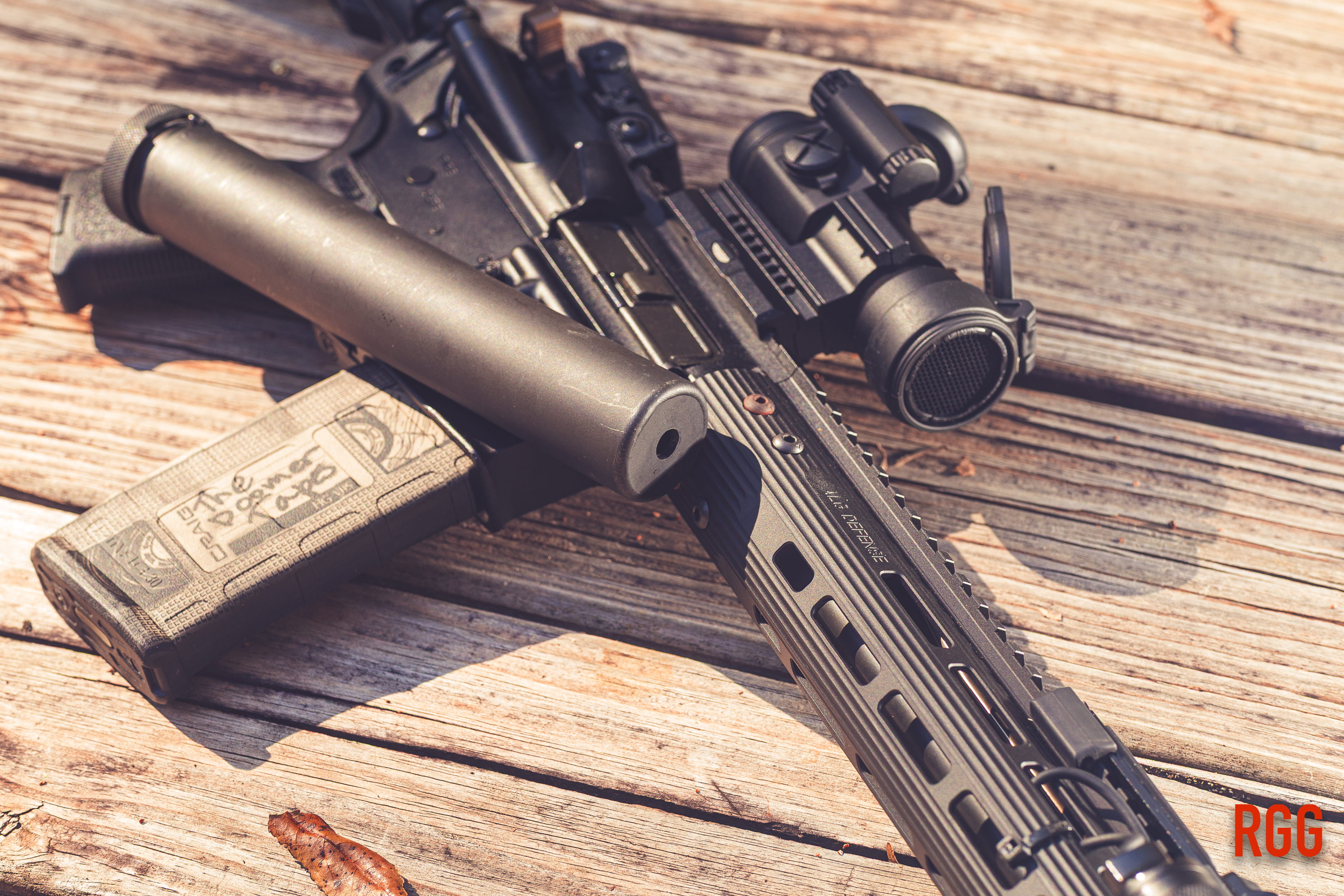
If you're a Second Amendment Radical, you've probably been busier than a one-legged man in an ass-kicking contest trying to keep up with things lately. Here's where we stand as of this writing!
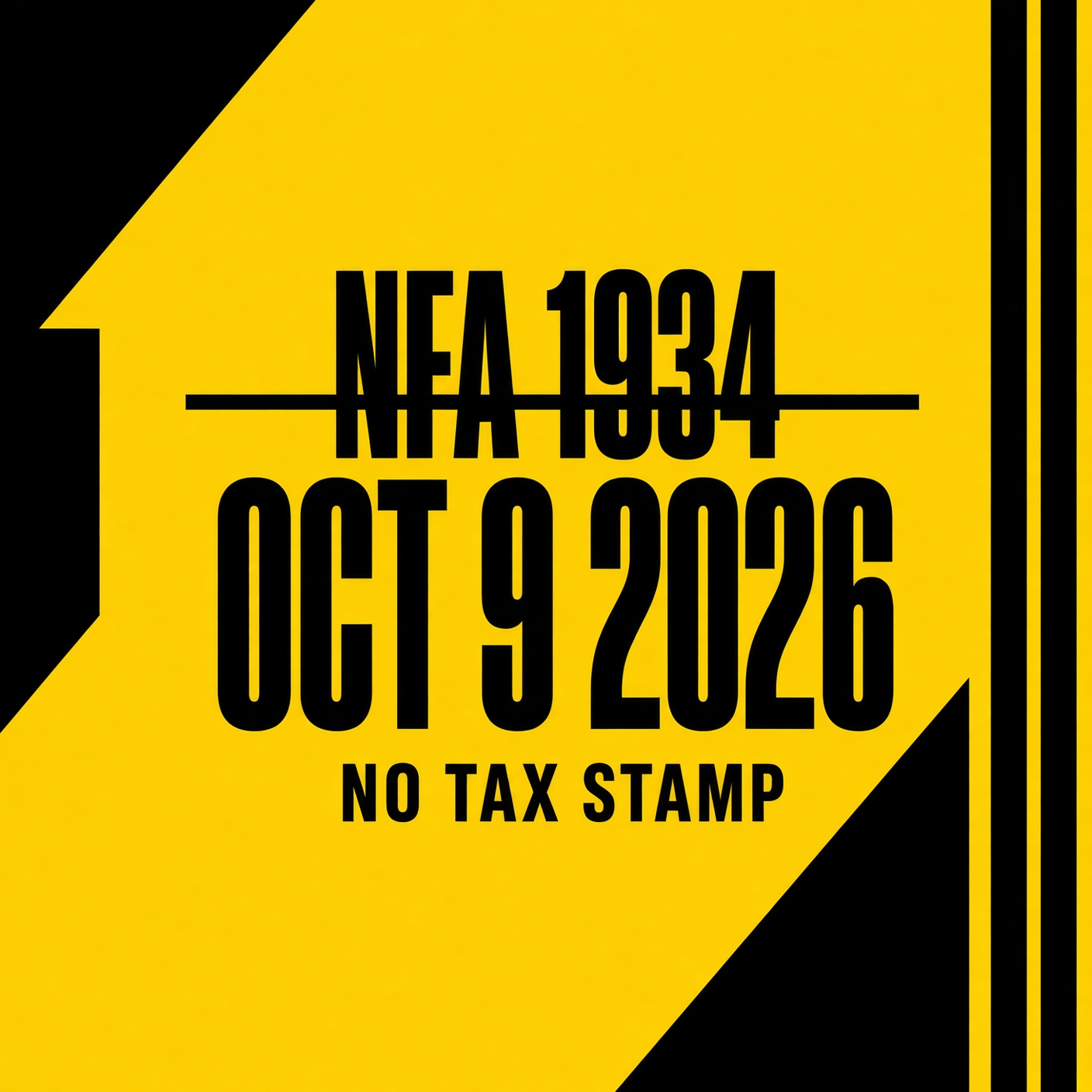
Last Friday, ATF Director Robert Cekada signed an open letter and dropped a video that a lot of us have been waiting on for months. In that statement—watch it right here in his official video announcement—he confirmed that effective October 9, 2026, the ATF will no longer require prior approval, Form 1 or Form 4 processing, or registration in the National Firearms Registration and Transfer Record for short-barreled rifles, short-barreled shotguns, silencers, and AOWs. The policy applies nationwide to anyone otherwise eligible to possess firearms, not just the plaintiffs in the underlying litigation. Machine guns and destructive devices remain fully regulated under the NFA with the $200 tax intact. The Gun Control Act still applies, including Form 4473s and NICS checks for dealer transfers. And for SBRs and SBSs, Form 20s are still required for interstate transport.
These moves have dealt a stunning blow to the National Firearms Act of 1934. For the first time in 92 years, the core prior-approval and registration machinery that turned certain common arms and accessories into heavily taxed, registered, and delayed items is not being enforced for the most popular items. Silencers and SBRs are now, at the federal level and in states that do not impose their own contrary requirements, closer to ordinary rifles and pistols than they have been since FDR signed the original law. But the Act itself is not dead yet. It remains on the books. The court injunction that started this cascade was limited to specific parties. The ATF's nationwide application is an exercise of enforcement discretion, not a repeal or a permanent judicial strike-down. The devil is in the details—state laws, residual federal restrictions, the possibility of future enforcement, and the fact that Congress could still reinstate the tax and collapse the foundation under the current posture. This is a massive opening. It is not the finish line.
The National Firearms Act of 1934: How We Got Here and Why the Recent Moves Matter
The National Firearms Act was never a pure public-safety measure aimed only at gangsters. It was the first major federal gun control statute, structured as a tax and registration scheme because a direct ban raised constitutional problems under the limited view of federal power that still existed in 1934. The recent sequence—zeroing the tax in the One Big Beautiful Bill, the Northern District of Texas ruling in Silencer Shop Foundation v. ATF / Jensen v. ATF, the decision not to appeal, and Cekada's nationwide guidance—has stripped away the practical enforcement of the most burdensome parts of that scheme for suppressors, SBRs, SBSs, and AOWs. To understand why this is such a big deal and why it remains fragile, you have to look at how the law was built and how it has been adjusted ever since.
The History of the National Firearms Act of 1934 and the Motivations Behind It
The ostensible excuse for the NFA was the gangland crime of the Prohibition and early Depression era, ironically caused by government lawmaking itself. The St. Valentine's Day Massacre in Chicago in 1929—seven members of Bugs Moran's gang killed with Thompson submachine guns and a sawed-off shotgun—became a poster event for the harridans of the day. High-profile bank robbers and outlaws such as John Dillinger, Bonnie and Clyde, and others used fast cars and automatic or easily concealable weapons to outrun local police. Ironically the crime rate of the nation overall was lower back then than it is now in several large cities, proving spurious lawmaking is futile. But anyway...
Attorney General Homer Cummings and the Roosevelt administration pushed for federal action. Because a straightforward ban on possession raised serious questions under the Commerce Clause and the Second Amendment, they structured the bill as a tax and registration requirement under the Constitutional taxing power. The $200 tax (roughly $4,700–$4,900 in today's dollars depending on the hyperinflation calculator) was openly intended to be prohibitive for ordinary citizens while creating a paper trail that could be used against those who ignored it. As one contemporary supporter noted, they did not expect gangsters to register and pay the tax.
Broader context mattered. The government had been looking for a vehicle for federal gun control for some time. The Bonus Army march of World War I veterans on Washington in 1932—tens of thousands of desperate men and their families camped out demanding early payment of their service bonuses, eventually dispersed by troops under MacArthur with tear gas and tanks—heightened elite fears of social unrest during the Depression. Corporate interests and political leaders were concerned about the possibility of worker or veteran revolts and the availability of firearms to ordinary people in that climate. The NFA was part of a New Deal-era expansion of federal authority that used the dramatic, relatively rare gangster incidents as the public justification for gun laws. Standard historical accounts, including current ones from the ATF itself and contemporary reporting, center the gang violence and the Valentine's Day Massacre; the broader climate of Depression-era unrest supplied additional political momentum.
The lawmakers of 1934 were not operating in a vacuum. Progressive-era reformers had spent years arguing that only a national response could deal with interstate crime and the “menace” of armed civilians who might not share the political priorities of the moment. The Valentine’s Day Massacre supplied the emotional hook; the Bonus March supplied the fear of organized, armed veterans; and the Depression supplied the sense that ordinary Americans might not remain passive. The result was a statute that reached far beyond the handful of gangsters who made the headlines.
The First Draft Covered Nearly Every Firearm, and the SBR/SBS Classifications Were a Workaround
The original draft (H.R. 9066) defined the regulated "firearms" far more broadly. It included pistols and revolvers, along with short-barreled shotguns and rifles, machine guns, and silencers. The idea was to capture nearly every firearm type in existence. Ordinary long guns were left largely alone in the final version as a "Constitutional dodge", but the drafters anticipated that people would simply cut down exempt rifles and shotguns into improvised pistols. That is why the short-barreled rifle and short-barreled shotgun categories were created: to prevent the sawing-off of the exempt weapons into NFA-regulated concealable arms. Without those classifications, the exemption for standard rifles and shotguns would have been an easy loophole.
Even for the gun owners and organizations of the day, the original draft was a bridge too far. The National Rifle Association, led at the time by President Karl T. Frederick (an Olympic shooter), mobilized members and testified in the House Ways and Means Committee hearings. Frederick and others argued against including ordinary handguns and pushed for a more limited approach. The NRA and allied groups helped force the removal of pistols and revolvers from the final bill. Frederick's testimony is still available in the hearing record; he noted that the NRA had already worked on state-level uniform firearms laws and expressed support for regulating machine guns and shorter weapons while resisting broader restrictions on common arms. The final Act, signed June 26, 1934, covered machine guns, short-barreled rifles and shotguns, silencers, and "any other weapons." The pushback worked on the handgun front, but the tax-and-register framework for the remaining categories survived.
Crafted as a Tax to Pass the Constitutional Smell Test
The NFA was deliberately written as a revenue measure rather than a direct prohibition. The Supreme Court later upheld it in Sonzinsky v. United States (1937) on the ground that it was a valid exercise of the taxing power, even if the practical effect was to discourage possession. The $200 amount was set high enough relative to the cost of the guns themselves (a Thompson submachine gun retailed in the $175–$227 range) that legal civilian ownership of the covered items became rare. It was a below-the-line ban achieved through the tax code. Compliance was mixed at first, but the scheme stuck and was later administered by the Treasury Department and eventually the ATF. To this day the tax monies are technically captured by the IRS, as the IRS is the only federal body permitted to collect taxes. If you registered NFA items back in the day by hand, you may have noted you were sending your Form and payment to an IRS office, not the ATF. What happened was the IRS would collect the tax and forward the Form to the NFA office for processing and the NICS check. But anyway...
The Court in Sonzinsky refused to look behind the label of “tax” to examine legislative motive. So long as the measure produced some revenue and was framed as a tax, it passed muster. That doctrinal choice locked in the NFA’s architecture for nearly a century. Once Congress zeroed the tax on the most common categories, the doctrinal foundation that Sonzinsky supplied for the registration and prior-approval machinery disappeared.
Changes and Adjustments Up Until Just Before the Clyde Amendment of 2025 in the OBBB
The NFA was amended and expanded over the decades. The Gun Control Act of 1968 added more restrictions, dealer licensing, and prohibited-person categories. The Firearms Owners' Protection Act of 1986 included the Hughes Amendment, which closed the machine-gun registry for newly manufactured civilian machine guns. Various administrative rules and ATF interpretations further tightened the practical effect. Items like drop-in auto sears and even shoelaces were determined to lawfully constitute being "machine guns". The core $200 tax and registration requirements for SBRs, SBSs, silencers, and AOWs remained in place until the One Big Beautiful Bill Act of 2025 zeroed the making and transfer taxes on those categories effective January 1, 2026. Machine guns and destructive devices kept the $200 tax. We covered the OBBB provisions and their strategic importance in an earlier piece on this site: The Impending Demise Of The National Firearms Act Of 1934?.
Between 1934 and 2025 the practical burden of the NFA grew even as the real value of the $200 tax shrank. Wait times stretched from weeks to months and sometimes longer. Trusts and corporate entities became common workarounds for individuals who wanted to keep the items out of a single person’s name, especially since individual purchases required the sign-off of a local chief law enforcement officer, who often did not want to sign, or didn't even know what the process was so it sat on their desk for months. Trusts still required a NICS check for the receiving person, but the CLEO was cut out of the loop.
Form 1 and Form 4 backlogs became a standing complaint. The combination of inflation, longer processing times, and expanded prohibited-person categories turned what had been a high but theoretically payable tax into a de facto permission regime for ordinary citizens. The Clyde Amendment and the subsequent litigation finally attacked that structure at its root.
Andrew Clyde's Actions, the Court Cases, the Injunctions, and Director Cekada's Guidance
Representative Andrew Clyde (R-GA), a Navy veteran and FFL holder, pushed hard for deeper NFA relief inside the reconciliation process. The final OBBB language zeroed the tax but left the registration and prior-approval requirements in place after Byrd Rule concerns - the companion bill in the Senate fell under the wrath of the Parliamentarian. She could be ignored but the GOP waffled. Clyde and colleagues later wrote to the Attorney General arguing that the tax and the registration scheme were inseparably linked, that Congress's intent was to eliminate the practical burden, and that the remaining registration requirements lacked a constitutional foundation once the tax was $0. Multiple lawsuits followed, including Silencer Shop Foundation v. ATF and the consolidated Jensen v. ATF in the Northern District of Texas. On August 5, 2026, Judge James Wesley Hendrix held that the challenged NFA making, registration, and transfer provisions could no longer be justified under the taxing power for the zero-tax items and issued an injunction covering the plaintiffs and certain related parties, effective shortly thereafter. You can read the Memorandum Opinion and Order and the Final Judgment. The Department of Justice declined to appeal. On October 9, 2026, Director Cekada issued the open letter and guidance applying the non-enforcement posture nationwide as a matter of enforcement discretion, consistent with the Attorney General's position. Voluntary registration remains available for those who want it (for state-law compliance or other reasons). The full text of the open letter and the accompanying FAQ are on the ATF site.
The court’s reasoning tracked the logic Clyde and the plaintiffs had advanced: once the tax is zero, the registration and prior-approval requirements no longer serve as tools “in aid” of tax collection. They become free-standing regulatory commands that exceed Congress’s enumerated powers. The injunction was party-specific on its face, covering the named plaintiffs, their members, customers, and (where applicable) agencies and political subdivisions. ATF’s later decision to apply the same non-enforcement policy nationwide was a policy choice, not an expansion of the court’s order. That distinction remains important.
Where We Are Today: Tenets, Enforcement (or the Lack of It), and the Remaining Landmines
The National Firearms Act still stands. Congress has not repealed it. No court has struck the entire statute. An injunction is a court order that restrains a party (here, the government) from enforcing certain provisions against certain people or in certain circumstances. It is not the same as the law being declared void across the board or repealed. Enforcement discretion is a policy choice by the executive branch; it can be reversed by a future administration or even by the same administration under changed political conditions. That distinction matters.
In states that do not independently ban or restrict the covered items and do not tie legality to federal registration, SBRs, SBSs, silencers, and AOWs can now be purchased from a dealer on a Form 4473 with a NICS check, the same as a traditional rifle or pistol. Texas, Florida, and a long list of other "free" states fall into this category (the commonly cited group of roughly 27 states includes Alabama, Arizona, Arkansas, Idaho, Indiana, Iowa, Kansas, Kentucky, Louisiana, and others). The ATF guidance and the underlying court reasoning also cover making these items—assembling an SBR from a pistol and a stock, or printing a silencer—without prior Form 1 approval for ordinary non-commercial activity. Specialized markings are no longer required under the non-enforcement policy. Dealers still need their Special Occupational Tax if they are in the NFA business, and GCA rules continue to apply.
There are clear downsides and remaining risks. Enforcement can resume almost at the will of the ATF or a future Department of Justice. Congress could pass a bill restoring the NFA tax; that would kick the foundation out from under the current court decisions and the enforcement posture, potentially subjecting people who acquired items during the current window to later enforcement actions. There is no automatic grandfathering. There is no guarantee of an amnesty period for affected owners to get into compliance. The government could enforce tomorrow, and you could be imprisoned, or even killed, by Friday.
Some residual federal restrictions remain: possessing an item with an obliterated serial number or one that was illegally imported is still a crime. SBRs (regardless of how they were purchased or made) still require an approved Form 20 to be moved interstate under the Gun Control Act provisions that the court did not fully enjoin in the same way. Some states treat pistols more permissively for loaded vehicle transport than rifles; New Hampshire, for example, has long had restrictions on loaded long guns in vehicles aimed at poaching prevention, while handguns face different rules. Always check the specific statutes where you travel.
State-level NFA laws create a patchwork. California and a handful of other poisonous jurisdictions have full-on bans or near-bans on civilian suppressor and short-barreled firearm ownership; the federal guidance and the injunction do not grant legality there. Georgia and Alaska are examples of states where NFA item ownership is not legal under state law unless the person has a valid tax stamp or has registered in accordance with the NFA. Georgia's statutes (O.C.G.A. §§ 16-11-122 through 16-11-124) prohibit possession of silencers and short-barreled firearms except for persons who have registered them under the NFA. Alaska has a similar structure treating unregistered suppressors as prohibited weapons with an affirmative defense or exemption tied to federal registration. Mississippi decided recently that being a valid possessor of a firearm satisfies its NFA-based requirements; Attorney General Lynn Fitch issued an opinion that Form 4 is now voluntary for Mississippians under the current ATF guidance. Georgia's Attorney General has indicated a desire to see the state's laws aligned with the federal changes and has noted that legislative amendments may be necessary, but he is hamstrung by the need for the legislature to act and by the independent District Attorney framework—local prosecutors are not bound by a federal injunction or by the AG's preferences in the same way. Some shops are moving ahead anyway. Mammoth Arms in Griffin has been selling silencers and SBRs on 4473s; see their post here. State enforcement has not happened, and there's a chance it may never happen. Additionally Eleanor Arms in Trenton, Georgia, is requesting their local DA not enforce the law.
The practical landscape is therefore uneven. In free states the difference between October 8 and October 10, 2026 is dramatic for anyone who wants a suppressor or a short-barreled rifle. In states that still key legality to the old federal process, the federal non-enforcement policy does not automatically clear the state-level prohibition. FPC and other groups have already written to the attorneys general of roughly fifteen states urging them to issue non-enforcement guidance and to support legislative cleanup. The speed and clarity of those state responses will determine how widely the federal opening can be used.
What Gun Owners and Second Amendment Radicals Can Do to Make These Changes Permanent
This window is real, but it is not guaranteed to stay open forever. Anti-2A forces will try to reverse it the moment they have the political power to do so. The practical response is volume, visibility, and political pressure.
- Buy and make as many of the affected items as you can, consistent with the laws of your state. Silencers are cheap right now relative to the old process. Printing them is cheaper still for those set up for it. Converting an AR pistol to an SBR costs less than $80 in parts and maybe takes 20 minutes for even an unskilled person. The strategic idea is to flood the nation with these items so that resumed enforcement becomes a near-impossible practical task. Millions of unregistered but lawfully acquired (under current federal policy) suppressors and SBRs change the political and logistical calculus. They can't get us all.
- Contact all your federal and state-level representatives, your District Attorneys, your Attorney General, and anyone else who may care. Explain that these moves go toward restoring the Second Amendment in this nation. Supporting them strengthens the electoral and employment positions of those officials with the people who actually vote and who actually own the guns. Polite, factual, persistent contact works better than pure outrage.
- Join all the gun rights organizations that you can. There is power in numbers, and the organizations that filed or supported the successful litigation are the ones that created the opening. For Georgia head on over to GA2A. For Florida head on over to Florida Carry - you get the drift for the states. For national head on over to GOA and get that extra legal shield. And as always support Firearms Policy Coalition.
- Frequent businesses such as Mammoth Arms that took chances to get these items out into the wild, even if it meant risking their own businesses and licenses. Vote with your wallet.
- Emphasize the importance of quick and massive action. If anti-2A forces regain power at the federal or state level, the enforcement discretion can flip and the residual statutes can be used aggressively. Do not assume the current posture is permanent.
The more of these items that exist in ordinary hands, the higher the political cost of trying to put the old regime back in place. That is the strategic point of the “flood the zone” approach. It does not make the statute disappear, but it makes aggressive re-enforcement far less attractive and far more difficult to execute at scale.
Closing: Hope, Optimism, and the Work Still Ahead
The National Firearms Act of 1934 has been a standing insult to the Second Amendment for more than nine decades. The combination of the OBBB tax zeroing, the Texas court ruling, the decision not to appeal, and Director Cekada's nationwide guidance has knocked out the most practical teeth of that law for suppressors, SBRs, SBSs, and AOWs. Millions of Americans can now treat these items far more like ordinary firearms at the federal level. That is a genuine, historic shift. It is also incomplete. The statute is still there. State laws in many places still require the old paperwork or ban the items outright. Future administrations or Congress can try to rebuild the wall.
Second Amendment Radicals have a clear job: use the opening. Buy the cans. Build the SBRs. Support the shops that are treating the guidance as real. Push your state legislatures and AGs to clean up the residual statutes. Keep the pressure on Congress for full repeal. The more common these items become in ordinary hands, the harder it becomes for anyone to put the genie back in the bottle without massive political cost. This is the best practical position the community has been in since 1934. It is not the end of the fight, but it is the first time in a long time that the momentum is running the right direction. Stay optimistic, stay active, and keep building.
The next months will test whether the community treats this as a temporary gift or as the start of a durable change. The statute is still on the books. The enforcement posture is still a policy choice. State codes still matter. Those facts are not reasons for despair; they are the reasons to act while the window is open. Every suppressor that leaves a dealer on a 4473, every SBR that is assembled without a Form 1 in a free state, every letter to a state legislator, and every purchase from a shop that moved early adds to the practical difficulty of reversing course. That is how a 92-year-old tax-and-registry scheme begins to lose its grip.
Director Cekada’s Video Statement
Watch ATF Director Robert Cekada’s official announcement:
https://www.youtube.com/watch?v=I48Jq5KGC_4
Disclaimer: This article is not legal advice. Laws and enforcement postures can change. Anyone with real questions about their specific situation, their state, or a particular transaction should consult a qualified attorney licensed in the relevant jurisdiction.
note: I wrote this with the aid of Grok. Let me know what you think. With Grok I can output faster, but it may not seem like "me" as much. Without Grok, you get "me" but slower.
Get Yourself A Gun And Learn It
This is a firearms blog, so we're going to recommend guns. Of course don't forget other things like medical, comms, doing your Area Study, and so on. There's better sources than RGG on those topics, but for firepower, we have you covered.
Ideally you'll at least want either a basic rifle, i.e. an AR-15, or a pistol, i.e. a GLOCK 19, to start. Both are exceedingly common firearms with plenty of accessories, spare parts, training, and support. However, in some restricted areas, both an AR and a GLOCK are hard to get easily, and you may have to settle for a shotgun for quickly arming yourself. It beats a sharp stick. Note, the in-house counsel wants to remind you that we're talking the legal acquisition of guns here. We're still working on abolishing gun control, and we don't want you in jail. Unfortunately you'll have to play ball in this regard. But anyways, here are some basic suggestions for getting armed.
| Firearm | Cost | Buy Now |
|---|---|---|
| Radical Firearms RF00028 AR-15 | $469 | Buy Now! |
| GLOCK 19 Gen6 9mm Pistol | $620 | Buy Now! |
| Mossberg 590 Shotgun | $621 | Buy Now! |
Learn how to make guns, as well.
| 3D Printer | Cost | Buy Now |
|---|---|---|
| Ender Creality 3 V3 SE | $186 | Buy Now! |
Support This Site
Operating Regular Guy Guns and bringing you quality content costs money, money that I am more than happy to spend, even after all these years! I get the occasional sponsor, but bills still have to be paid, ha ha.
You'll see the articles peppered with affiliate links. I get a few pennies when you make your purchases via my links.
-
Buy more guns at Palmetto State Armory
-
Buy more guns at Bear Creek Arsenal
-
Buy more guns at Brownells
TODO
Broken links in old articles
Addendums to old stuff
Buy more guns and make more guns
Podcast? AI killed the podcast.
Donate Bitcoin: 36wKfH7wgQQna6BByvAe8oiEmdqREUXuYQ